
FDA-A.252-2013
Parts
Object number
FDA-A.252-2013
Object type
Identification
Title
Servitor's Desk
Title Type
assigned by cataloguer
Description
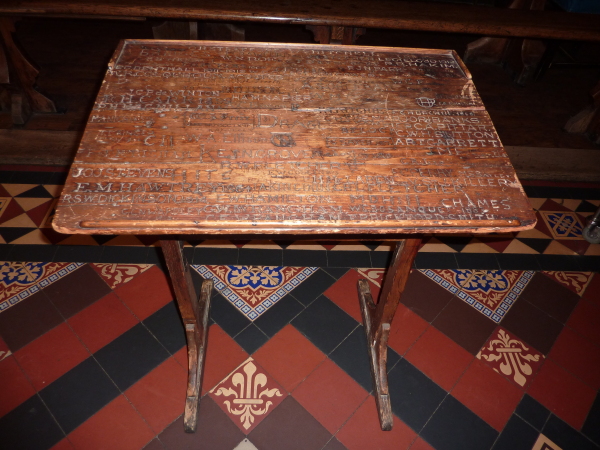
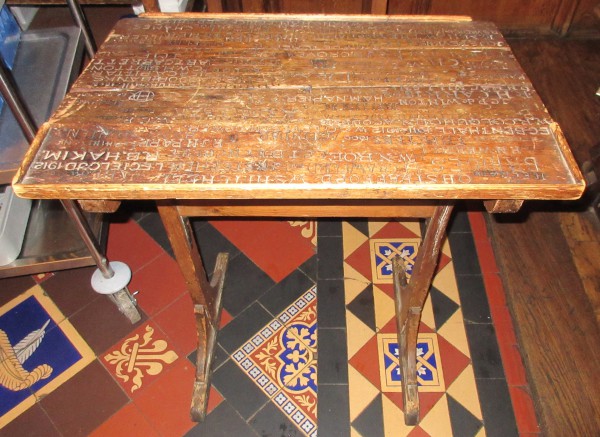
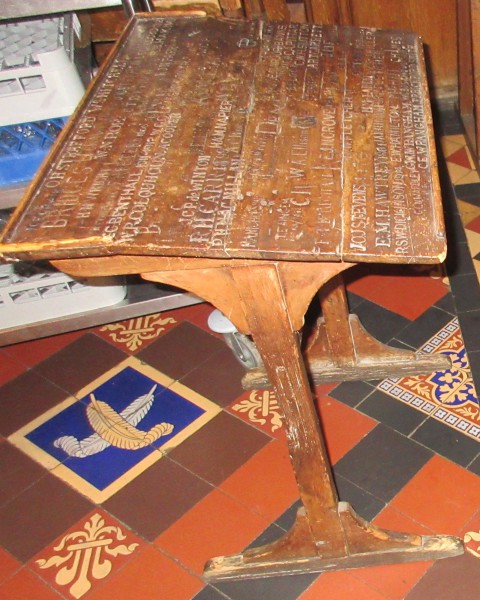
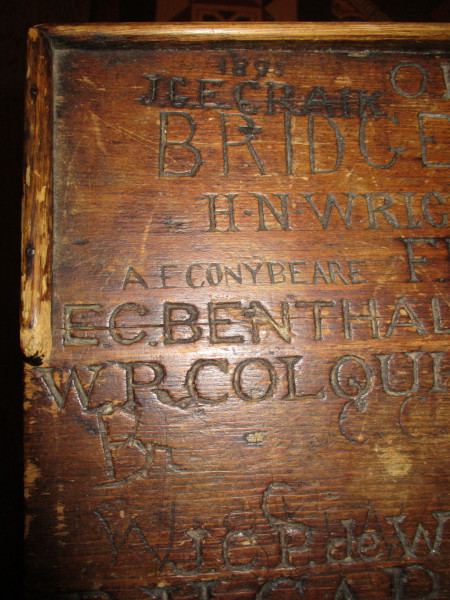
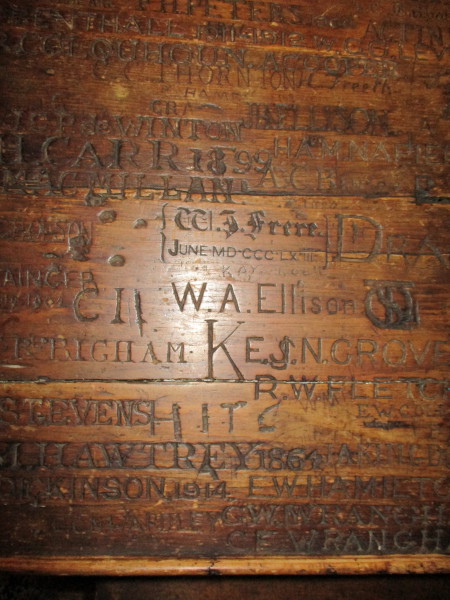
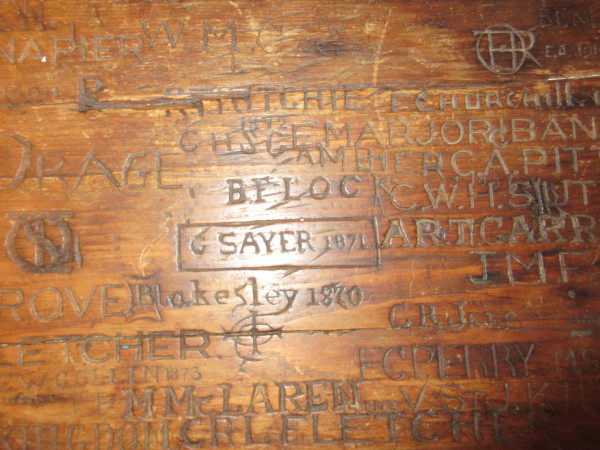
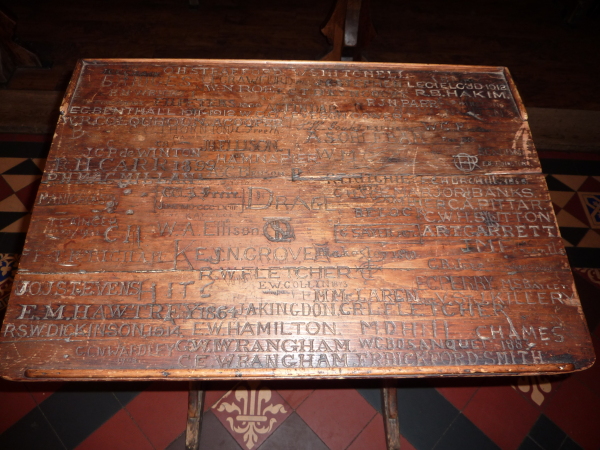
Pine school desk, rectangular sloping top with graffiti and gallery, on later trestle supports joined by a stretcher, with iron brackets
Comments
A series of at least 16 similar small desks with two end supports can be seen in a photograph of Lower School, the oldest schoolroom at Eton, built in the 15th century. The photograph dates from c.1867. Similar desks are also seen in use in an illustration of Upper School (the second schoolroom to be built) from c.1920. However, this seems to be the only surviving example of this type of desk at the College.
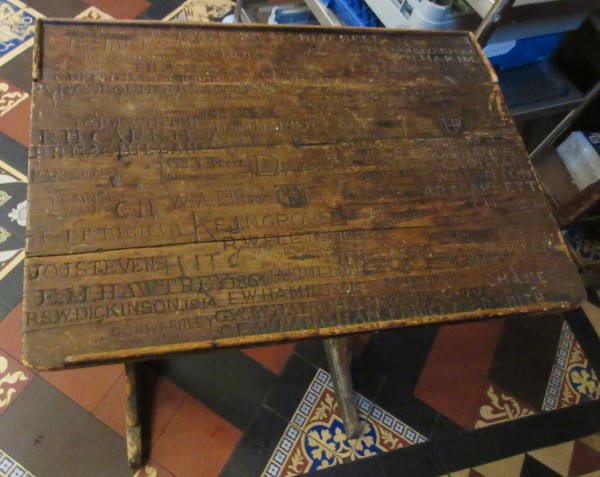
An illustration in the 'Eton Guide' by R.A. Austen Leigh (published 1930; p.113) shows the top of the Servitor's Desk used in College Hall (a dining hall). The text includes: ‘this is the desk of the Servitor, a very old office, held by the lowest boy but one in Liberty. (“Liberty” consists, so far as College is concerned, of the first six boys below Sixth Form). It is his duty to write out in a book the commons allowed for each day's dinner according to the number actually dining in Hall. He counts by “messes” and “half-messes”, a mess consisting of four boys. It will be seen that it is the practice of most Servitors to carve their name on the desk, and among the names carved are those of A.C. Benson, essayist and poet (d.1925), and J.K. Stephen, the gifted author of 'Lapsus Calami’, who died in 1892, at the early age of thirty-three.'
The Servitor was a boy charged with recording the number of ‘messes’, or groupings of four boys who dined together, at each meal in College Hall (a dining hall), so that the correct allocation of food could be made. The Servitor sat at this desk and typically carved his name into it to record his time in the role.
A series of at least 16 desks similar to this can be seen in a photograph of Lower School (the oldest schoolroom at Eton), built in the 15th century. The photograph dates from c.1867. This seems to be the only surviving example.
An illustration in the 'Eton Guide' by R.A. Austen Leigh (published 1930; p.113) shows the top of the Servitor's Desk used in College Hall (a dining hall). The text includes: ‘this is the desk of the Servitor, a very old office, held by the lowest boy but one in Liberty. (“Liberty” consists, so far as College is concerned, of the first six boys below Sixth Form). It is his duty to write out in a book the commons allowed for each day's dinner according to the number actually dining in Hall. He counts by “messes” and “half-messes”, a mess consisting of four boys. It will be seen that it is the practice of most Servitors to carve their name on the desk, and among the names carved are those of A.C. Benson, essayist and poet (d.1925), and J.K. Stephen, the gifted author of 'Lapsus Calami”, who died in 1892, at the early age of thirty-three.'
Description
Dimensions
height (actual size): 790mm
width (actual size): 650mm
depth (actual size): 460mm
width (actual size): 650mm
depth (actual size): 460mm
Inscription
Numerous hand-carved names and dates, the earliest date being: '1816'
Material
pine
iron
iron
Materials & techniques note
Elm?
Physical description
Pine school desk, rectangular sloping top with graffiti and gallery, on later trestle supports joined by a stretcher, with iron brackets
Production
Date
early 19th century
History and association
Associated object
pa-a.12:47-2012 (related object)
References
• Austen-Leigh, R. C., A Guide to Eton College, Eton, 1981 (p.79)