
FDA-P.167-2010
Parts
Object number
FDA-P.167-2010
Object type
Identification
Title
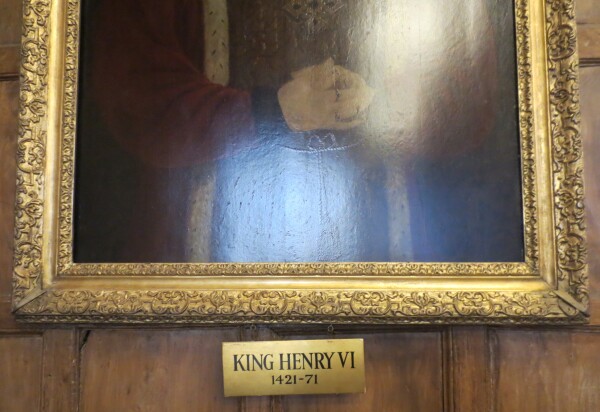
Henry VI
Description
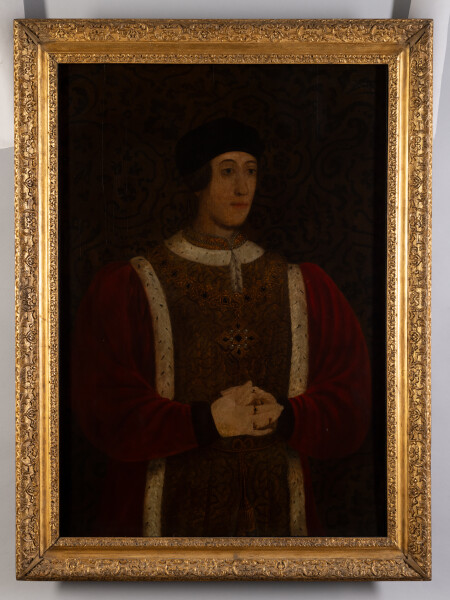
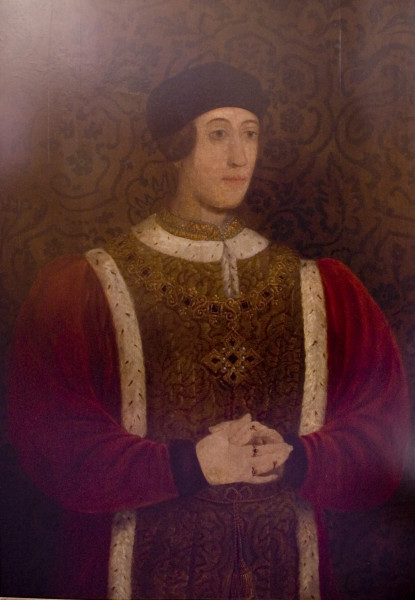
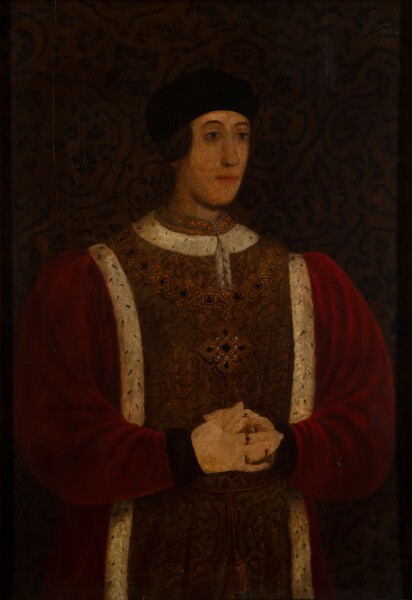
Three-quarter-length, reversed from usual portrait type, in embroidered tunic, ermine trimmed velvet coat and black cap, and wearing linked SS collar of the Lancastrian order.
Comments
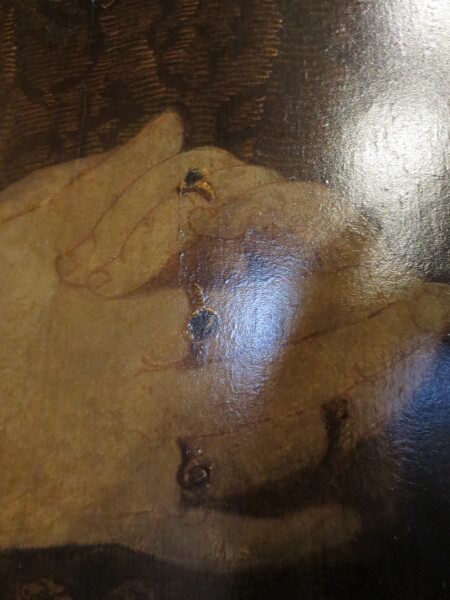
Almost all 16th-centry portraits of King Henry VI follow the same pattern. They are undoubtedly derived from a single source, which is now lost. The works were made by workshops of artists, who each seem to have specialised, painting different elements of the portrait. In general, Henry VI’s portraits show the sitter half-length, with his hands gently clasped in front of him. He has brown eyes and a black bonnet. He wears ermine trimmed clothing and a gold jewelled chain with pendant cross.
Other 16th-century portraits of Henry VI in the Eton Collections seem to be fairly close copies of an earlier portrait of 1520-40 in the Royal collection. However, this late 17th to early 18th century example is interesting because here many variations have been introduced, making it an unusual portrait of Henry VI.
For example, it is long enough to be described as a three-quarter-length portrait. It faces in the opposite direction to other portraits. It is unusually large in scale and both the face shape and bold pattern in the background are not typical. Tree ring analysis of the boards indicates that they are similar to examples used for portraits painted in the south-west of Germany, northern France and the Low Countries. This may explain why the artist of this work had less knowledge of the appearance of Windsor version.
'[A] gift from some former students at the college consists of an ancient portrait of Henry VI, the founder of Eton College, which has been hung upon the panelled wainscot on the north side of the hall, a short distance from the west end of the building.'
[St James's Gazette, Friday 10 December 1897, p.17]
Other 16th-century portraits of Henry VI in the Eton Collections seem to be fairly close copies of an earlier portrait of 1520-40 in the Royal collection. However, this late 17th to early 18th century example is interesting because here many variations have been introduced, making it an unusual portrait of Henry VI.
For example, it is long enough to be described as a three-quarter-length portrait. It faces in the opposite direction to other portraits. It is unusually large in scale and both the face shape and bold pattern in the background are not typical. Tree ring analysis of the boards indicates that they are similar to examples used for portraits painted in the south-west of Germany, northern France and the Low Countries. This may explain why the artist of this work had less knowledge of the appearance of Windsor version.
'[A] gift from some former students at the college consists of an ancient portrait of Henry VI, the founder of Eton College, which has been hung upon the panelled wainscot on the north side of the hall, a short distance from the west end of the building.'
[St James's Gazette, Friday 10 December 1897, p.17]
Description
Content (person)
Content (note)
Dimensions
height (sight size): 1070mm
width (sight size): 750mm
height (frame): 1263mm
width (frame): 946mm
depth (frame): 92mm
width (sight size): 750mm
height (frame): 1263mm
width (frame): 946mm
depth (frame): 92mm
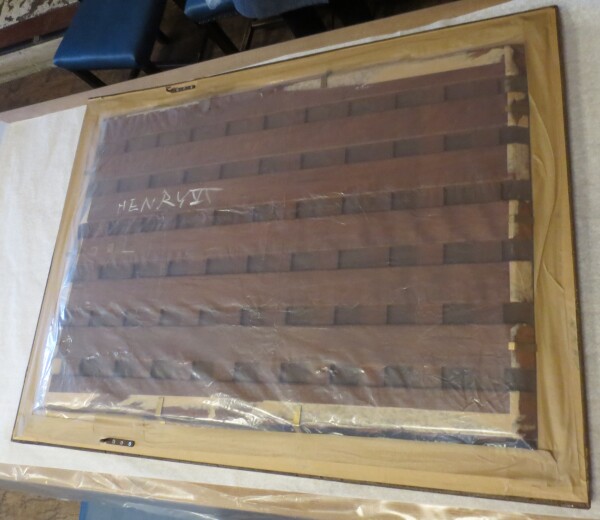
Inscription
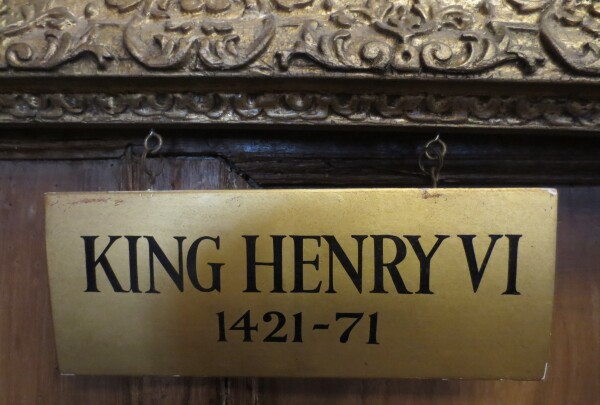
Identification labels on frame
Materials & techniques note
Oil on panel
Physical description
19th-century carved gilt frame
Production
Date
Post 1651
History and association
Object history note
Provenance: Presented to Eton College by former Collegers in 1897
References
• Ian Tyers, 'The Tree-Ring Analysis of 10 Panel Paintings at Eton College', Dendrochronology Consultancy Ltd, Report 158, June 2009 (p. 38)
• Cole, B. ed., Eton Collections Review 2, December 2007 (H.Ryan, 'Portraits of the Founder at Eton and King's', p. 44, fig. 7 p. 41)
• Cust, L., Eton College Portraits, 1910 (p. 70)
• Cole, B. ed., Eton Collections Review 2, December 2007 (H.Ryan, 'Portraits of the Founder at Eton and King's', p. 44, fig. 7 p. 41)
• Cust, L., Eton College Portraits, 1910 (p. 70)