
FDA-P.19-2010
Parts
Object number
FDA-P.19-2010
Object type
Identification
Title
Charles Grey
Title Type
assigned by cataloguer
Description
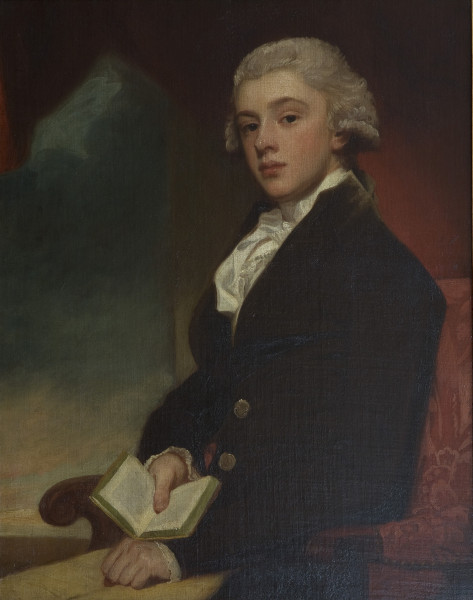
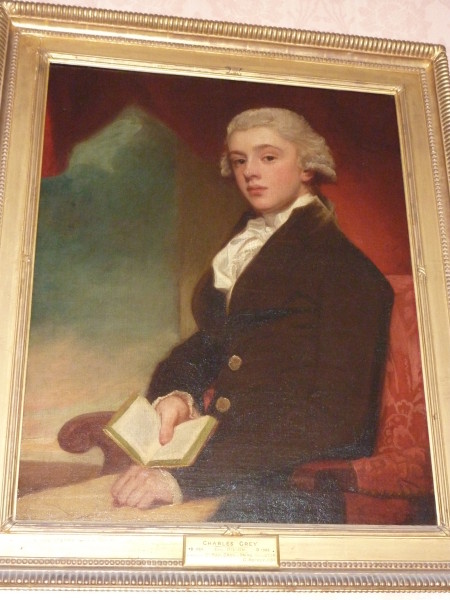
Half-length portrait of a young man, in a brown coat and a white stock, seated in a red chair, holding a book
Comments
Charles Grey was born at Fallodon in Northumberland, the son of General Sir Charles Grey, created 1st Earl Grey in 1806. Grey was in Sixth Form in 1780 and 1781. His nickname at school was Lankey; his arrogance and overbearing manner, suggested in this portrait, were already apparent. Some of his schoolboy verses were printed in Musae Etonenses in 1795. In 1786, after travelling on the Continent, he became M.P. for Northumberland. In 1807 he succeeded to the earldom.
Grey was a parliamentary supporter of Charles James Fox and in January 1806, when Lord Grenville and Fox came into power, was made First Lord of the Admiralty. On the death of Fox, he became leader of the Whigs and Foreign Secretary. Throughout his life he remained attached to the Whig party and to his idea of popular liberty. As Prime Minister (1830-1834), he introduced the Reform Bill.
Although his conduct of the Reform Bill through Parliament entroned him in the whig pantheon, he was also much criticised, not least for nepotism and greed: 'a deep shade of grey pervaded almost every lucrative office during his ministry'. He was praised by some for his fluency as a speaker and his dignified appearance, but at the same time accused of 'vanity, personal antipathies, caprice, indecision, and a thousand weaknesses generated by these passions and defects'.
Whig politician Charles Grey served as Prime Minister from 1830 to 1834. His government enacted the Reform Act of 1832, allowing a broader segment of the population the vote, and the Slavery Abolition Act the following year.
According to the artist’s own record, Grey sat to George Romney 22 times between January and October 1784. Grey was 30 years Romney’s junior, but the number of sittings may indicate a friendship between the two. As a result of these sittings, this Eton Leaving Portrait and a similar portrait for Grey’s family were painted. The other version shows the sitter with his shoulders turned to face the viewer, while his gaze is directed elsewhere. The Eton version may be similar to the Leaving Portrait of Grey’s friend, Samuel Whitbread (1764–1815), at the sitter’s own request.
George Romney became a fashionable portraitist, despite never exhibiting at the Royal Academy in London. He is best-known for his paintings of his muse Emma Hart (later Lady Hamilton, mistress to Lord Nelson) in the guise of mythological or allegorical characters.
At Eton 1773-1781
Afterwards 2nd Earl Grey and Prime Minister
Grey was a parliamentary supporter of Charles James Fox and in January 1806, when Lord Grenville and Fox came into power, was made First Lord of the Admiralty. On the death of Fox, he became leader of the Whigs and Foreign Secretary. Throughout his life he remained attached to the Whig party and to his idea of popular liberty. As Prime Minister (1830-1834), he introduced the Reform Bill.
Although his conduct of the Reform Bill through Parliament entroned him in the whig pantheon, he was also much criticised, not least for nepotism and greed: 'a deep shade of grey pervaded almost every lucrative office during his ministry'. He was praised by some for his fluency as a speaker and his dignified appearance, but at the same time accused of 'vanity, personal antipathies, caprice, indecision, and a thousand weaknesses generated by these passions and defects'.
Whig politician Charles Grey served as Prime Minister from 1830 to 1834. His government enacted the Reform Act of 1832, allowing a broader segment of the population the vote, and the Slavery Abolition Act the following year.
According to the artist’s own record, Grey sat to George Romney 22 times between January and October 1784. Grey was 30 years Romney’s junior, but the number of sittings may indicate a friendship between the two. As a result of these sittings, this Eton Leaving Portrait and a similar portrait for Grey’s family were painted. The other version shows the sitter with his shoulders turned to face the viewer, while his gaze is directed elsewhere. The Eton version may be similar to the Leaving Portrait of Grey’s friend, Samuel Whitbread (1764–1815), at the sitter’s own request.
George Romney became a fashionable portraitist, despite never exhibiting at the Royal Academy in London. He is best-known for his paintings of his muse Emma Hart (later Lady Hamilton, mistress to Lord Nelson) in the guise of mythological or allegorical characters.
At Eton 1773-1781
Afterwards 2nd Earl Grey and Prime Minister
Description
Content (person)
Dimensions
height (sight size): 865mm
width (sight size): 670mm
height (frame): 1076mm
width (frame): 896mm
depth (frame): 62mm
width (sight size): 670mm
height (frame): 1076mm
width (frame): 896mm
depth (frame): 62mm
Inscription
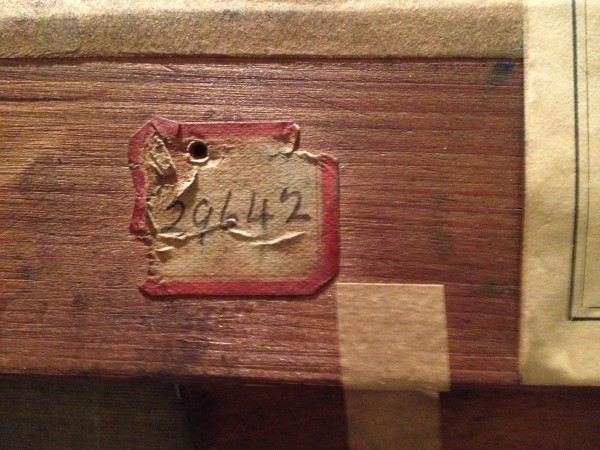
I.D. label on frame
Materials & techniques note
Oil on canvas
Physical description
Carved gilt Romney frame
Production
Person
Romney, George, 1734 - 1802 (Artist)
Date
1784
History and association
Object history note
Provenance: Commissioned by the sitter or his family; by whom presented to the Head Master at Eton College in c.1784
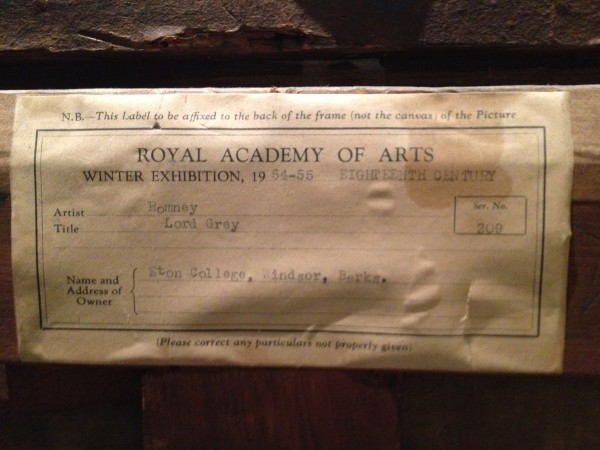
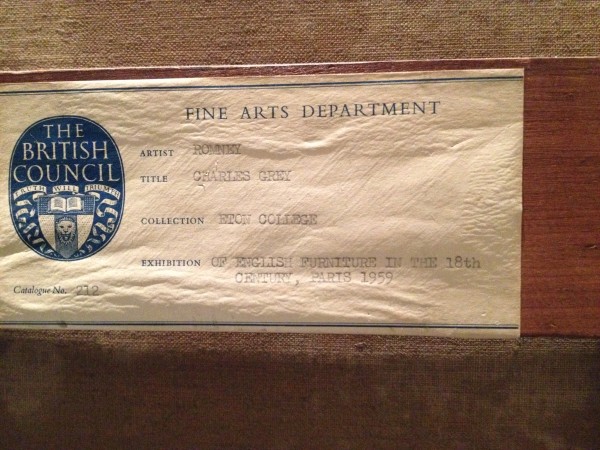
Exhibited: 'Eton Loan Collection', Eton College, 1891, catalogue number 88; 'Exhibition of British Art c.1000-1860' (Winter Exhibition), Royal Academy, London, 6 January to 10 March 1934, catalogue number 333; 'Eton Leaving Portraits', Tate Gallery, London, April to May 1951, catalogue number 10; 'Eighteenth Century Exhibition' (Winter Exhibition), Royal Academy, London, 1954-55, catalogue number 209; 'Exhibition of English Furniture in the 18th Century', British Council, Paris 1959, catalogue number 212; 'Leaving Portraits from Eton College', Dulwich Picture Gallery, 18 July to 20 October 1991, catalogue number 15
Exhibited: 'Eton Loan Collection', Eton College, 1891, catalogue number 88; 'Exhibition of British Art c.1000-1860' (Winter Exhibition), Royal Academy, London, 6 January to 10 March 1934, catalogue number 333; 'Eton Leaving Portraits', Tate Gallery, London, April to May 1951, catalogue number 10; 'Eighteenth Century Exhibition' (Winter Exhibition), Royal Academy, London, 1954-55, catalogue number 209; 'Exhibition of English Furniture in the 18th Century', British Council, Paris 1959, catalogue number 212; 'Leaving Portraits from Eton College', Dulwich Picture Gallery, 18 July to 20 October 1991, catalogue number 15
References
• Cust, L., Eton College Portraits, 1910 (p.19, no.25, Plate XI)
• McConnell, ed., Treasures of Eton, London, 1976 (Plate 14)
• Ward, H. & Roberts, W., Romney: A Biographical and Critical Essay with a Catalogue Raisonne of his Works, London, 1904 (p.66)
• Sterry, W., Annals of the King's College of Our Lady of Eton Beside Windsor, 1898 (p.192)
• Kidson, Alex, George Romney: A Complete Catalogue of His Paintings, Yale University Press, 2015 (Pall Mall Magazine, August 1900, p.315)
• McConnell, ed., Treasures of Eton, London, 1976 (Plate 14)
• Ward, H. & Roberts, W., Romney: A Biographical and Critical Essay with a Catalogue Raisonne of his Works, London, 1904 (p.66)
• Sterry, W., Annals of the King's College of Our Lady of Eton Beside Windsor, 1898 (p.192)
• Kidson, Alex, George Romney: A Complete Catalogue of His Paintings, Yale University Press, 2015 (Pall Mall Magazine, August 1900, p.315)