
FDA-P.22-2010
Parts
Object number
FDA-P.22-2010
Object type
Identification
Title
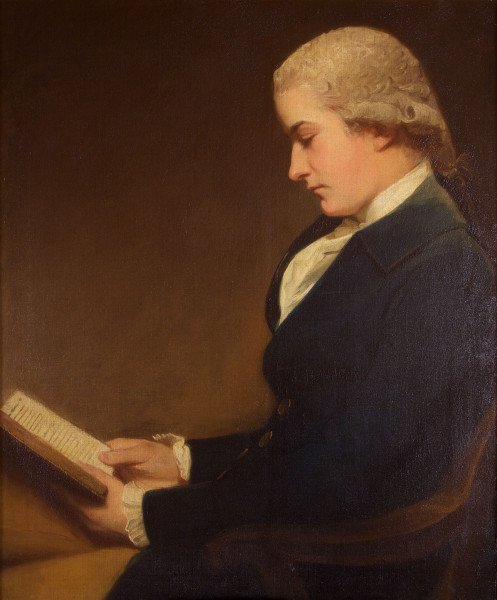
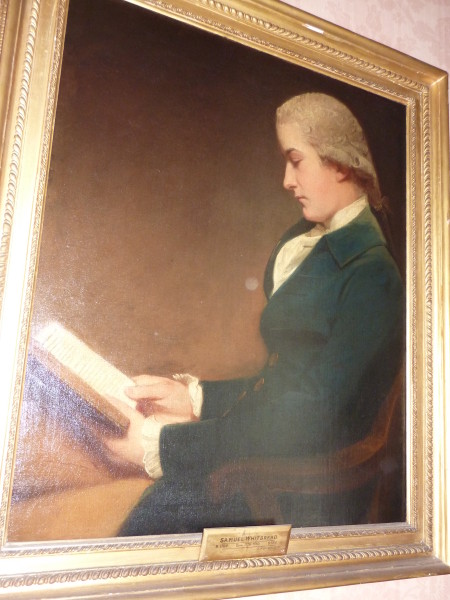
Samuel Whitbread
Title Type
assigned by cataloguer
Description
Half-length portrait of a young man, in a blue coat and white stock, seated in a chair reading a book
Comments
George Romney (1734-1802)
By 1776, when he leased the grand house of the painter Coates, Romney vied in popularity with Reynolds, offering competitive prices. He never exhibited publicly, rather relying on his reputation in society, particularly in painting women and children. In the 1790s he moved into his specially designed studio in Hampstead, suffering much from 'his delicate feelings and modest temper ... the prodigious quantity of canvas in Romney's rooms, not finishing nor apparently in a wasy to be finished, cries out shame'.
The only son of Samuel Whitbread, the brewer and founder of the firm. He entered Eton with a private tutor and in 1780 was in Sixth Form together with his friend Charles Grey (see cat.no.15.). By 1784 he had begun his foreign travels in Europe under the tutelage of William Coxe, the historian and writer. They returned in May 1786 and he joined his father's brewery.
In 1790 he married Elizabeth, the sister of his school friend Grey. He represented Bedford in Parliament from 1790 until 1815. He, like Grey, supported Fox and persecuted the Government for many years. These attacks culminated in the impeachment of Viscount Melville in 1806, in which Whitbread spoke energetically (like Grey, he was a witty and powerful speaker). Throughout his life Whitbread devoted himself to the advocacy of contentious public causes: the Poor Law, peace with France at any price, and the defence of the Princess of Wales. His contemporaries felt that althogh his commitment to the improvement of the lot of mankind was undoubted, his approach tended to be rash and impetuous and to alienate the educated classes.
He was one of the earliest patrons to announce his intention of forming a collectioin of British art, and therafter patronized British art exclusively. The majority of this collection was kept at his estate, Southill Park, Bedfordshire. It includes works by Gainsborough, Reynolds, Constable, Turner, Lawrence and Opie.
He committed suicide by cutting his throat on 6 July 1815. The inquest found that his mind was deranged.
George Romney (1734-1802)
By 1776, when he leased the grand house of the painter Coates, Romney vied in popularity with Reynolds, offering competitive prices. He never exhibited publicly, rather relying on his reputation in society, particularly in painting women and children. In the 1790s he moved into his specially designed studio in Hampstead, suffering much from 'his delicate feelings and modest temper ... the prodigious quantity of canvas in Romney's rooms, not finishing nor apparently in a way to be finished, cries out shame'.
At Eton 1775-1780
By 1776, when he leased the grand house of the painter Coates, Romney vied in popularity with Reynolds, offering competitive prices. He never exhibited publicly, rather relying on his reputation in society, particularly in painting women and children. In the 1790s he moved into his specially designed studio in Hampstead, suffering much from 'his delicate feelings and modest temper ... the prodigious quantity of canvas in Romney's rooms, not finishing nor apparently in a wasy to be finished, cries out shame'.
The only son of Samuel Whitbread, the brewer and founder of the firm. He entered Eton with a private tutor and in 1780 was in Sixth Form together with his friend Charles Grey (see cat.no.15.). By 1784 he had begun his foreign travels in Europe under the tutelage of William Coxe, the historian and writer. They returned in May 1786 and he joined his father's brewery.
In 1790 he married Elizabeth, the sister of his school friend Grey. He represented Bedford in Parliament from 1790 until 1815. He, like Grey, supported Fox and persecuted the Government for many years. These attacks culminated in the impeachment of Viscount Melville in 1806, in which Whitbread spoke energetically (like Grey, he was a witty and powerful speaker). Throughout his life Whitbread devoted himself to the advocacy of contentious public causes: the Poor Law, peace with France at any price, and the defence of the Princess of Wales. His contemporaries felt that althogh his commitment to the improvement of the lot of mankind was undoubted, his approach tended to be rash and impetuous and to alienate the educated classes.
He was one of the earliest patrons to announce his intention of forming a collectioin of British art, and therafter patronized British art exclusively. The majority of this collection was kept at his estate, Southill Park, Bedfordshire. It includes works by Gainsborough, Reynolds, Constable, Turner, Lawrence and Opie.
He committed suicide by cutting his throat on 6 July 1815. The inquest found that his mind was deranged.
George Romney (1734-1802)
By 1776, when he leased the grand house of the painter Coates, Romney vied in popularity with Reynolds, offering competitive prices. He never exhibited publicly, rather relying on his reputation in society, particularly in painting women and children. In the 1790s he moved into his specially designed studio in Hampstead, suffering much from 'his delicate feelings and modest temper ... the prodigious quantity of canvas in Romney's rooms, not finishing nor apparently in a way to be finished, cries out shame'.
At Eton 1775-1780
Description
Content (person)
Whitbread, Samuel, 1764 - 1815 (Sitter)
Dimensions
height (sight size): 810mm
width (sight size): 680mm
height (frame): 996mm
width (frame): 860mm
depth (frame): 54mm
width (sight size): 680mm
height (frame): 996mm
width (frame): 860mm
depth (frame): 54mm
Inscription
I.D. label on frame
Materials & techniques note
Oil on canvas
Physical description
Carved gilt frame
Production
Person
Romney, George, 1734 - 1802 (Artist)
Date
1781-1782
History and association
Object history note
Provenance: Commissioned by the sitter or his family; by whom presented to the Head Master at Eton College in c.1781
Exhibited: 'Eton Loan Collection', Eton College, 1891, catalogue number 90; 'Eton Leaving Portraits', Tate Gallery, London, April to May 1951, catalogue number 8
Exhibited: 'Eton Loan Collection', Eton College, 1891, catalogue number 90; 'Eton Leaving Portraits', Tate Gallery, London, April to May 1951, catalogue number 8
References
• Cust, L., Eton College Portraits, 1910 (p.20, no.27, Plate XII)
• Dulwich Picture Gallery, Leaving Portraits from Eton College, exhibition catalogue 1991 (p.31)
• Ward, H. & Roberts, W., Romney: A Biographical and Critical Essay with a Catalogue Raisonne of his Works, London, 1904 (p.170)
• McConnell, ed., Treasures of Eton, London, 1976 (p.95)
• Kidson, Alex, George Romney: A Complete Catalogue of His Paintings, Yale University Press, 2015 (Pall Mall Magazine, August 1900, p.504, illustrated)
• Dulwich Picture Gallery, Leaving Portraits from Eton College, exhibition catalogue 1991 (p.31)
• Ward, H. & Roberts, W., Romney: A Biographical and Critical Essay with a Catalogue Raisonne of his Works, London, 1904 (p.170)
• McConnell, ed., Treasures of Eton, London, 1976 (p.95)
• Kidson, Alex, George Romney: A Complete Catalogue of His Paintings, Yale University Press, 2015 (Pall Mall Magazine, August 1900, p.504, illustrated)