
FDA-P.37-2010
Parts
Object number
FDA-P.37-2010
Object type
Identification
Title
Henry Richard Fox
Title Type
assigned by cataloguer
Description
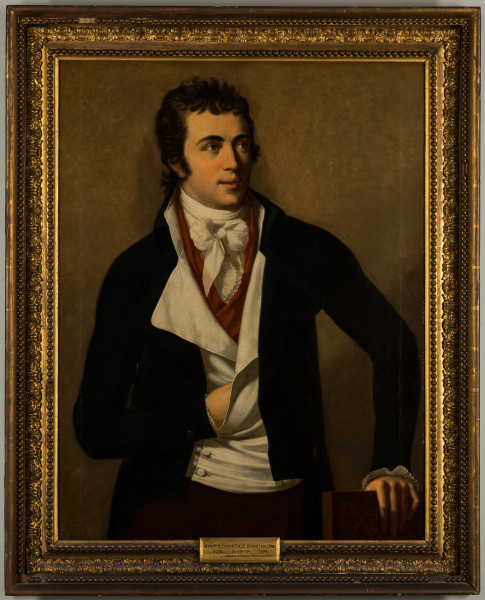
Half-length portrait of a young man, in a blue coat, a white waistcoat, and red inner waistcoat, white stock
Comments
The only son of the 2nd Lord Holland, he inherited the title when only a year old and was brought up by his uncle, Charles James Fox. Like his father, he was sent to Eton and was in Sixth Form. In the 1790s he travelled on the Continent.
He established himself in Florence and there met Fabre, who painted two pictures of him, one of which he presented to Eton. It seems that in 1809 he asked for it back. On 18 December 1809, Provost Goodall wrote to him about 'the Desire I have of making an attempt to retain ... your Lordship's Portrait ... at the Lodge. Lords Grenville, Downe and Wellesley having gratified the Wishes of all loyal Etonians by presenting their Pictures to me and my Successors for ever.' Evidently Goodall's letter had its intended effect.
Holland returned to England in 1796 with Elizabeth (nee Vassall) the wife of Sir Godfrey Webster. Having bribed Sir Godfrey to divorce his wife, he married Elizabeth in 1797. In 1800, in order that she might inherit under the terms of her grandfather's will, they took the name Vassall. In 1796 he entered the House of Lords, where he upheld the Whig cause. He twice held office. His lack of political success was sometimes attributed to his interfering wife. When Lady Holland asked Lord John Russell why her husband had been excluded from office in 1827, he replied; 'If you must know, it is because no man will act in a Cabinet with a person whose wife opens all his letters!'
The Hollands established Holland House as one of the leading literary and political salons in Europe. In this, they were assisted by John Allen (1771-1843), a republican and atheist, Warden of Dulwich College from 1811 and Master from 1820. Much of his time was spent at Holland House where he looked after the Library, issued the dinner invitations, allocated rooms to those staying the night, and carved at table. According to Macaulay, Allen was treated 'like a negro slave'.
According to Sidney Smith, London apothecaries specialised in the production of pills for people wo had been frightened at Holland House. Nonetheless, in contrast to his wife, Lord Holland was described by Macaulay as having a 'goodness of heart which appeared in every look and accent.' When in 1840 Holland died, the diarist Greville was to lament the passing of 'the only great House of reception and constant society in England ... this event may be said in perfect truth to eclipse the gaiety of nations.'
Francois Xavier Fabre (1766-1837)
A native of Montpellier, he studied in Paris, first with Vien and, from 1783 to 1784, in David's workshop. On winning the Prix de Rome in 1786 he arrived in Italy in 1787 and three years later found his first English patron, Lord Bristol. With the outbreak of war he fled to Naples and in 1793 to Florence. Here a circle of French refugee artists including Merimee worked for the poet Vittorio Alfieri and his mistress the Countess of Albany, the estranged wife of Charles Edward Stuart, the Young Pretender. Elizabeth Vassall belonged to the Albany set and she became the mistress of the 3rd Lord Holland when he arrived that year. Fabre was one of the artists who painted this young couple several times. After Holland's return to England in 1797, Fabre was entrusted with the dispatch of the treasures he had acquired in Italy. After the Countess of Albany's deth, Fabre inherited her collection which became the core of the Musee Fabre in Montpellier.
At Eton 1781-1790
3rd Baron Holland
Another portait of this sitter is Henry Richard Fox, third Baron Holland of Holland and third Baron Holland of Foxley (1773–1840), by John Simpson (after Charles Robert Leslie, 1829)
A similar portrait was formerly at Holland House.
He established himself in Florence and there met Fabre, who painted two pictures of him, one of which he presented to Eton. It seems that in 1809 he asked for it back. On 18 December 1809, Provost Goodall wrote to him about 'the Desire I have of making an attempt to retain ... your Lordship's Portrait ... at the Lodge. Lords Grenville, Downe and Wellesley having gratified the Wishes of all loyal Etonians by presenting their Pictures to me and my Successors for ever.' Evidently Goodall's letter had its intended effect.
Holland returned to England in 1796 with Elizabeth (nee Vassall) the wife of Sir Godfrey Webster. Having bribed Sir Godfrey to divorce his wife, he married Elizabeth in 1797. In 1800, in order that she might inherit under the terms of her grandfather's will, they took the name Vassall. In 1796 he entered the House of Lords, where he upheld the Whig cause. He twice held office. His lack of political success was sometimes attributed to his interfering wife. When Lady Holland asked Lord John Russell why her husband had been excluded from office in 1827, he replied; 'If you must know, it is because no man will act in a Cabinet with a person whose wife opens all his letters!'
The Hollands established Holland House as one of the leading literary and political salons in Europe. In this, they were assisted by John Allen (1771-1843), a republican and atheist, Warden of Dulwich College from 1811 and Master from 1820. Much of his time was spent at Holland House where he looked after the Library, issued the dinner invitations, allocated rooms to those staying the night, and carved at table. According to Macaulay, Allen was treated 'like a negro slave'.
According to Sidney Smith, London apothecaries specialised in the production of pills for people wo had been frightened at Holland House. Nonetheless, in contrast to his wife, Lord Holland was described by Macaulay as having a 'goodness of heart which appeared in every look and accent.' When in 1840 Holland died, the diarist Greville was to lament the passing of 'the only great House of reception and constant society in England ... this event may be said in perfect truth to eclipse the gaiety of nations.'
Francois Xavier Fabre (1766-1837)
A native of Montpellier, he studied in Paris, first with Vien and, from 1783 to 1784, in David's workshop. On winning the Prix de Rome in 1786 he arrived in Italy in 1787 and three years later found his first English patron, Lord Bristol. With the outbreak of war he fled to Naples and in 1793 to Florence. Here a circle of French refugee artists including Merimee worked for the poet Vittorio Alfieri and his mistress the Countess of Albany, the estranged wife of Charles Edward Stuart, the Young Pretender. Elizabeth Vassall belonged to the Albany set and she became the mistress of the 3rd Lord Holland when he arrived that year. Fabre was one of the artists who painted this young couple several times. After Holland's return to England in 1797, Fabre was entrusted with the dispatch of the treasures he had acquired in Italy. After the Countess of Albany's deth, Fabre inherited her collection which became the core of the Musee Fabre in Montpellier.
At Eton 1781-1790
3rd Baron Holland
Another portait of this sitter is Henry Richard Fox, third Baron Holland of Holland and third Baron Holland of Foxley (1773–1840), by John Simpson (after Charles Robert Leslie, 1829)
A similar portrait was formerly at Holland House.
Description
Content (person)
Dimensions
height (sight size): 910mm
width (sight size): 670mm
width (sight size): 670mm
Inscription
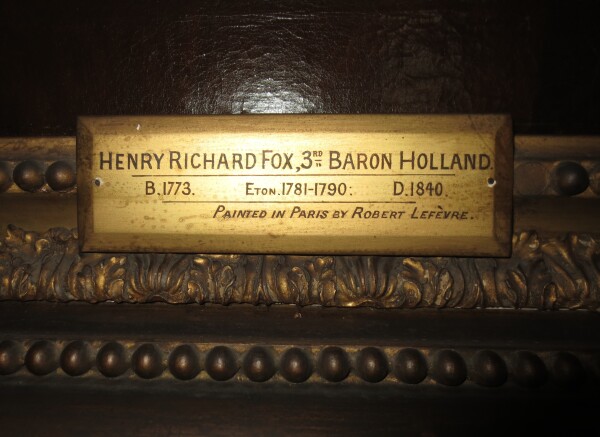
I. D. label on frame, incorrectly names the artist: 'Robert LeFevre'
Materials & techniques note
Oil on canvas
Physical description
Carved gilt frame with beading
Production
Person
Fabre, Francois-Xavier, 1766 - 1837 (Artist)
Date
c.1795
History and association
Object history note
Provenance: Commissioned by the sitter or his family; by whom presented to the Head Master at Eton College in c.1795
Exhibited: Tate, catalogue no.47; Dulwich, catalogue no.25
Exhibited: Tate, catalogue no.47; Dulwich, catalogue no.25
References
• Cust, L., Eton College Portraits, 1910 (p.22, no.36, Plate XIX)
• Dulwich Picture Gallery, Leaving Portraits from Eton College, exhibition catalogue 1991 (Walker, no. 256)
• Dulwich Picture Gallery, Leaving Portraits from Eton College, exhibition catalogue 1991 (Walker, no. 256)