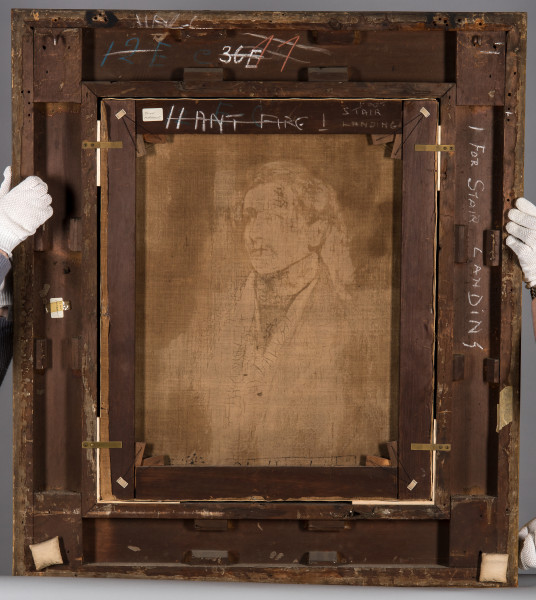

FDA-P.68-2010
Parts
Object number
FDA-P.68-2010
Object type
Identification
Title
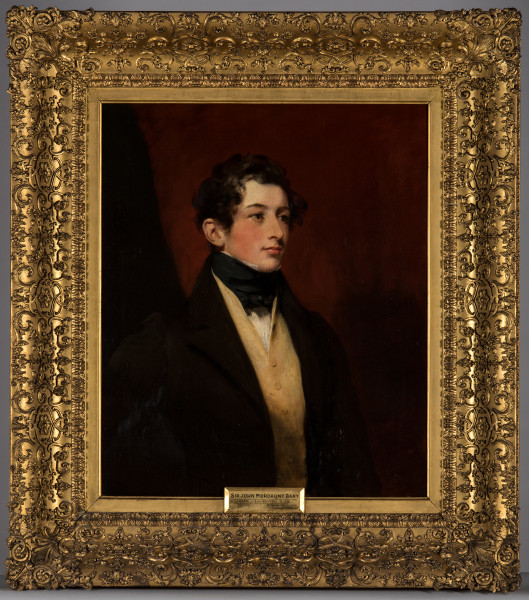
Sir John Mordaunt
Title Type
assigned by cataloguer
Description
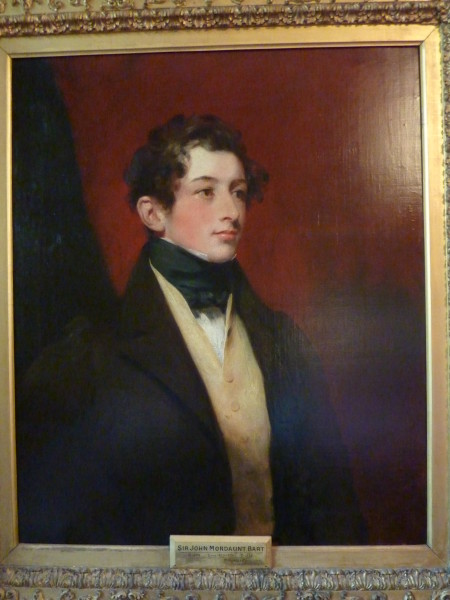
Half-length painted portrait of a man in a yellow waistcoat
Comments
Information from unpublished Margaret Carpenter catalogue by Richard J Smith, 1995.
Oil on canvas. 30x35". Attribution definite (S&D?) Cust p.41 & P1. Sitters Book: 1829 Sir J. Mordaunt £52.10.-. [M29006] This is a rather larger fee than would be expected for this size (more appropriate for 43x32"), and the Sitters Book has "Lady" in the margin. However, this may be an incorrect assumption. The Eton picture is a very fine portrait, and there is no doubt it is by Margaret Carpenter. Picture seen. Photo: Courtauld ref. B73/300.
The only son of Sir Charles Mordaunt, the 8th Baronet. He followed his father to Eton and was in Sixth Form, and became Captain of Oppidans in 1826. He inherited the baronetcy in 1823. He represented South Warwickshire in Parliament from 1835 until his untimely death on 27 September 1845. The Gentleman's Magazine gives the following account:
Sir John Mordaunt's death was the result of a very lamentable accident. He was out shooting with his friend and relative, Mr. Arthur Mills, and got over a fence. Mr. Mills was proceeding to follow him, and for that purpose was putting his gun upon half-cock, when the hammer slipped from his thumb, and the charge, after striking a rail, and glancing from a wall, wounded Sir John in both legs somewhat severely, he went on favourably for some days, when mortifications ensued ...
Margaret Carpenter (1793-1873)
As Miss Geddes she won the Gold Medal from the Salisbury Society of Artists in 1814, the year she sent her first picture to the Royal Academy. In 1817 she moved to London and, using her husband's name, became a fashionable portrait painter, influenced by Lawrence. Her earliest Leaver's Portrait was painted in 1832.
In this room, we are surrounded by Leaving Portraits from the early 19th century. Eton Leaving Portraits are portraits of (Old) Etonians, painted to mark their time at the College. There are some 280 in the College Collections. The earliest is attributed to Thomas Hudson (1701–1779) and was painted in 1754. The most recent are by photographic artist Tereza Červeňová and were made in 2024.
The tradition evolved from the earlier custom of boys presenting Leaving Money to the Head Master as they left the College. Edward Barnard was the first Head Master to request a Leaving Portrait in addition to the money. Barnard continued to honour one or two boys with the privilege of presenting their portrait each year. The works were given directly to Head Masters, who later presented their collections to the College. Some Head Masters became Provosts and so displays of portraits moved into the Provost’s Lodge.
This is the collection of portraits of boys requested by Dr Keate (after whom Keate House and Keate’s Lane are named).
Oil on canvas. 30x35". Attribution definite (S&D?) Cust p.41 & P1. Sitters Book: 1829 Sir J. Mordaunt £52.10.-. [M29006] This is a rather larger fee than would be expected for this size (more appropriate for 43x32"), and the Sitters Book has "Lady" in the margin. However, this may be an incorrect assumption. The Eton picture is a very fine portrait, and there is no doubt it is by Margaret Carpenter. Picture seen. Photo: Courtauld ref. B73/300.
The only son of Sir Charles Mordaunt, the 8th Baronet. He followed his father to Eton and was in Sixth Form, and became Captain of Oppidans in 1826. He inherited the baronetcy in 1823. He represented South Warwickshire in Parliament from 1835 until his untimely death on 27 September 1845. The Gentleman's Magazine gives the following account:
Sir John Mordaunt's death was the result of a very lamentable accident. He was out shooting with his friend and relative, Mr. Arthur Mills, and got over a fence. Mr. Mills was proceeding to follow him, and for that purpose was putting his gun upon half-cock, when the hammer slipped from his thumb, and the charge, after striking a rail, and glancing from a wall, wounded Sir John in both legs somewhat severely, he went on favourably for some days, when mortifications ensued ...
Margaret Carpenter (1793-1873)
As Miss Geddes she won the Gold Medal from the Salisbury Society of Artists in 1814, the year she sent her first picture to the Royal Academy. In 1817 she moved to London and, using her husband's name, became a fashionable portrait painter, influenced by Lawrence. Her earliest Leaver's Portrait was painted in 1832.
In this room, we are surrounded by Leaving Portraits from the early 19th century. Eton Leaving Portraits are portraits of (Old) Etonians, painted to mark their time at the College. There are some 280 in the College Collections. The earliest is attributed to Thomas Hudson (1701–1779) and was painted in 1754. The most recent are by photographic artist Tereza Červeňová and were made in 2024.
The tradition evolved from the earlier custom of boys presenting Leaving Money to the Head Master as they left the College. Edward Barnard was the first Head Master to request a Leaving Portrait in addition to the money. Barnard continued to honour one or two boys with the privilege of presenting their portrait each year. The works were given directly to Head Masters, who later presented their collections to the College. Some Head Masters became Provosts and so displays of portraits moved into the Provost’s Lodge.
This is the collection of portraits of boys requested by Dr Keate (after whom Keate House and Keate’s Lane are named).
Description
Content (person)
Mordaunt, John (Sir), 1808 - 1845 (Sitter)
Content (note)
Half-length, in a brown coat, and a yellow waistcoat
Dimensions
height (sight size): 750mm
width (sight size): 625
width (sight size): 625
Inscription
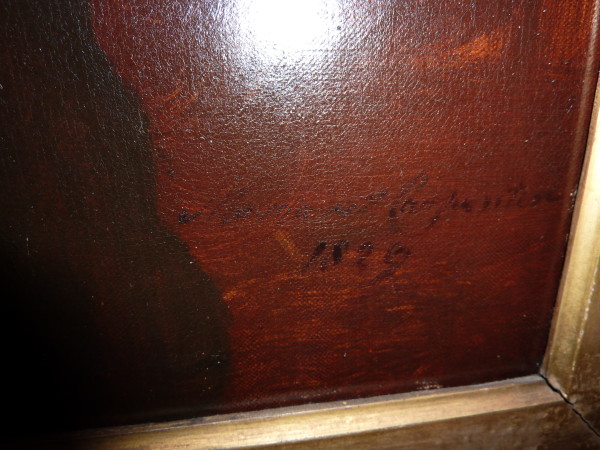
Signed and dated, lower right: 'Margaret Carpenter / 1829'
Materials & techniques note
Oil on canvas
Physical description
Elaborate carved gilt frame
Production
Person
Date
1829
History and association
Object history note
Provenance: Commissioned by the sitter or his family; by whom presented to the Head Master at Eton College
Exhibited: Tate, no.30; Dulwich, no.34
Exhibited: Tate, no.30; Dulwich, no.34
References
• Cust, L., Eton College Portraits, 1910 (p.41, no. 121, Plate XL)
• Dulwich Picture Gallery, Leaving Portraits from Eton College, exhibition catalogue 1991 (p.47)
• McConnell, ed., Treasures of Eton, London, 1976 (p.95)
• Dulwich Picture Gallery, Leaving Portraits from Eton College, exhibition catalogue 1991 (p.47)
• McConnell, ed., Treasures of Eton, London, 1976 (p.95)