
FDA-P.82-2010
Parts
Object number
FDA-P.82-2010
Object type
Identification
Title
Rt Hon. William Ewart
Title Type
assigned by cataloguer
Description
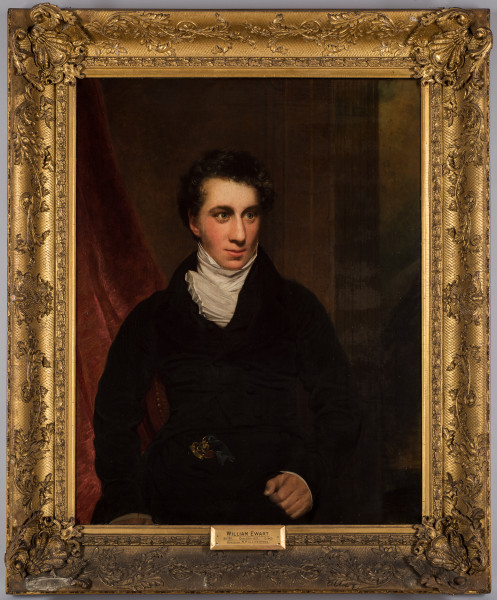
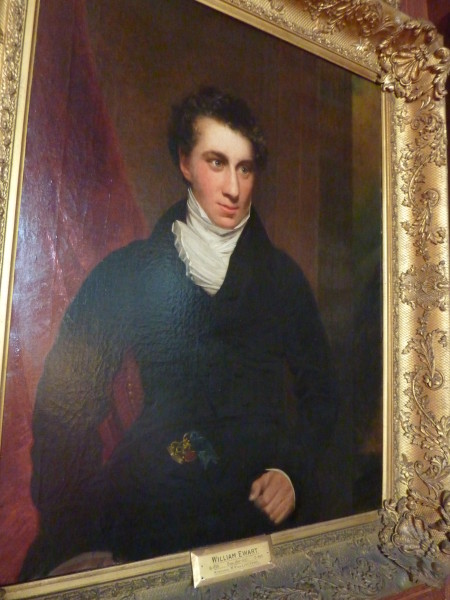
Half-length painted portrait of a young man
Comments
The son of William Ewart, a Liverpool merchant. Like the Gladstones, this important Liverpool family came from Scotland.
Ewart was in Sixth Form in 1817. Volume II of Musae Etonenses of 1869 contains some Latin verses by him on the Thames and Eton. At Christ Church he won the Newdigate Prize with his poem 'The Temple of Diana'. In 1827 Ewart was called to the bar and shortly afterwards entered Parliament. After the untimely death of his friend Huskisson at the opening of the Liverpool to Manchester railway on 15 September 1830, he successfully stood for Liverpool and represented his native city until 1837. From 1841 to 1868 he held the Dumfries seat.
As a Member of Parliament he brought about many improvements in the treament of criminals and ended capital punishment for certain offences: in 1840 he proposed the abolition of the death penalty. He was also active in education. In 1850 he was behind the Bill to establish free public libraries paid for by the rates.
In this room, we are surrounded by Leaving Portraits from the early 19th century. Eton Leaving Portraits are portraits of (Old) Etonians, painted to mark their time at the College. There are some 280 in the College Collections. The earliest is attributed to Thomas Hudson (1701–1779) and was painted in 1754. The most recent are by photographic artist Tereza Červeňová and were made in 2024.
The tradition evolved from the earlier custom of boys presenting Leaving Money to the Head Master as they left the College. Edward Barnard was the first Head Master to request a Leaving Portrait in addition to the money. Barnard continued to honour one or two boys with the privilege of presenting their portrait each year. The works were given directly to Head Masters, who later presented their collections to the College. Some Head Masters became Provosts and so displays of portraits moved into the Provost’s Lodge.
This is the collection of portraits of boys requested by Dr Keate (after whom Keate House and Keate’s Lane are named).
Lionel Cust's 1910 catalogue of the Eton College Portraits records this work as follows:
'William Ewart.
Born 1798, second son of william Ewart, of Liverpool. Entered Eton, 1811: 6th Form, 1817. Christ Church, Oxford. Newdigate Prize Poem, 1820. M.P. A noted reformer and philanthropist. Died 1869.
36 x 30 inches. Painter uncertain.
Seated figure to the knees, face three-quarters to te right; black coat and trousers.'
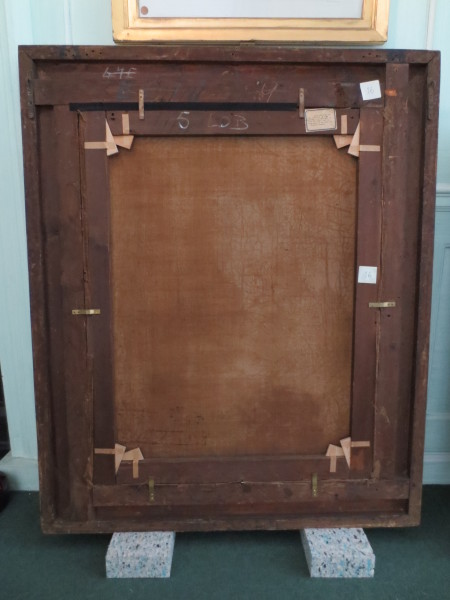
I.D. label on frame
At Eton 1811-17
Afterwards M.P. for Liverpool
Ewart was in Sixth Form in 1817. Volume II of Musae Etonenses of 1869 contains some Latin verses by him on the Thames and Eton. At Christ Church he won the Newdigate Prize with his poem 'The Temple of Diana'. In 1827 Ewart was called to the bar and shortly afterwards entered Parliament. After the untimely death of his friend Huskisson at the opening of the Liverpool to Manchester railway on 15 September 1830, he successfully stood for Liverpool and represented his native city until 1837. From 1841 to 1868 he held the Dumfries seat.
As a Member of Parliament he brought about many improvements in the treament of criminals and ended capital punishment for certain offences: in 1840 he proposed the abolition of the death penalty. He was also active in education. In 1850 he was behind the Bill to establish free public libraries paid for by the rates.
In this room, we are surrounded by Leaving Portraits from the early 19th century. Eton Leaving Portraits are portraits of (Old) Etonians, painted to mark their time at the College. There are some 280 in the College Collections. The earliest is attributed to Thomas Hudson (1701–1779) and was painted in 1754. The most recent are by photographic artist Tereza Červeňová and were made in 2024.
The tradition evolved from the earlier custom of boys presenting Leaving Money to the Head Master as they left the College. Edward Barnard was the first Head Master to request a Leaving Portrait in addition to the money. Barnard continued to honour one or two boys with the privilege of presenting their portrait each year. The works were given directly to Head Masters, who later presented their collections to the College. Some Head Masters became Provosts and so displays of portraits moved into the Provost’s Lodge.
This is the collection of portraits of boys requested by Dr Keate (after whom Keate House and Keate’s Lane are named).
Lionel Cust's 1910 catalogue of the Eton College Portraits records this work as follows:
'William Ewart.
Born 1798, second son of william Ewart, of Liverpool. Entered Eton, 1811: 6th Form, 1817. Christ Church, Oxford. Newdigate Prize Poem, 1820. M.P. A noted reformer and philanthropist. Died 1869.
36 x 30 inches. Painter uncertain.
Seated figure to the knees, face three-quarters to te right; black coat and trousers.'
I.D. label on frame
At Eton 1811-17
Afterwards M.P. for Liverpool
Description
Content (person)
Ewart, William, 1798 - 1869 (Sitter)
Content (note)
Half-length, in a black coat and a white stock
Dimensions
height (sight size): 905mm
height (sight size): 700mm
height (sight size): 700mm
Materials & techniques note
Oil on canvas
Physical description
Elaborate carved gilt Lawrence frame
Production
Person
Owen, William, 1769 - 1825 (Attributed to)
Date
c.1817
History and association
Object history note
Provenance: Commissioned by the sitter or his family; by whom presented to the Head Master at Eton College
Exhibited: Dulwich, catalogue no. 42
Exhibited: Dulwich, catalogue no. 42
References
• Cust, L., Eton College Portraits, 1910 (p.38, catalogue number 108)
• Dulwich Picture Gallery, Leaving Portraits from Eton College, exhibition catalogue 1991 (p.50)
• Dulwich Picture Gallery, Leaving Portraits from Eton College, exhibition catalogue 1991 (p.50)