
FDA-P.93-2010
Parts
Object number
FDA-P.93-2010
Object type
Identification
Title
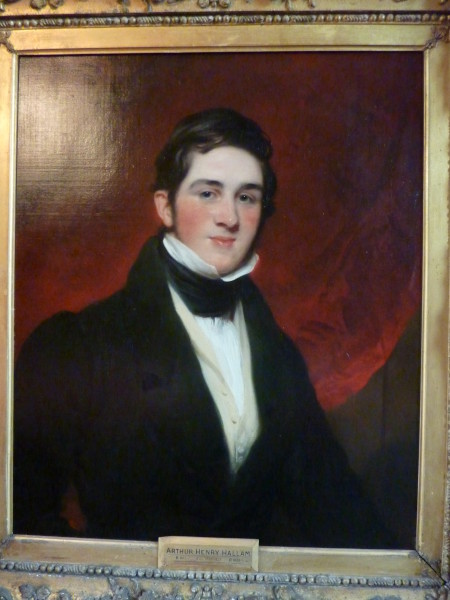
Arthur Henry Hallam
Title Type
assigned by cataloguer
Description
Half-length painted portrait of a young man
Comments
The son of the historian, he entered Eton as a pupil of E.C. Hawtrey, later Head Master and then Provost. His contemporaries at school included Gladstone, George Augustus Selwyn who became first Bishop of New Zealand, and the writer Alexander Kinglake. Hallam's famous friendship with Tennyson began at Cambridge in the spring of 1829. They were both elected to the famous Cambridge group The Apostles in January 1830 and in the summer of that year went together to Spain. At both Eton and Cambridge Hallam was considered outstandingly brilliant, although his classical attainments were not remarkable at either institution. In 1830 he published 'Poems, chiefly lyrical'.
In 1832 he became engaged to Tennyson's sister Emily, but he fell ill during the following spring. He died in Vienna in September. The post-mortem examination revealed a malformation of the brain which had brought on an apoplexy. His body was brought back to England and conveyed by sixteen horses to Clevedon Church near Bristol.
Fair Ship, that from the Italian shore,
Sailest the placid ocean plains,
With my lost Arthur's loved remains
Spread thy full wings ...
His death devastated his family and friends: Gladstone wrote in his diary of 'a mind full of beauty and of power ...When shall I see his like?' In 1850 Tennyson was to publish 'In Memoriam', a poem at least partly inspired by his friend's death:
My Arthur, whom I shall not see
Till all my widowed race be run;
Dear as the mother to the son,
More than my brothers are to me.
In this room, we are surrounded by Leaving Portraits from the early 19th century. Eton Leaving Portraits are portraits of (Old) Etonians, painted to mark their time at the College. There are some 280 in the College Collections. The earliest is attributed to Thomas Hudson (1701–1779) and was painted in 1754. The most recent are by photographic artist Tereza Červeňová and were made in 2024.
The tradition evolved from the earlier custom of boys presenting Leaving Money to the Head Master as they left the College. Edward Barnard was the first Head Master to request a Leaving Portrait in addition to the money. Barnard continued to honour one or two boys with the privilege of presenting their portrait each year. The works were given directly to Head Masters, who later presented their collections to the College. Some Head Masters became Provosts and so displays of portraits moved into the Provost’s Lodge.
This is the collection of portraits of boys requested by Dr Keate (after whom Keate House and Keate’s Lane are named).
Hallam's contemporaries at school included Gladstone, George Augustus Selwyn, who became first Bishop of New Zealand, and the writer Alexander Kinglake.
In 1850 Tennyson was to publish 'In Memoriam', a poem at least partly inspired by his friend's death: My Arthur, whom I shall not see Till all my widowed race be run; Dear as the mother to the son, More than my brothers are to me.
In 1832 he became engaged to Tennyson's sister Emily, but he fell ill during the following spring. He died in Vienna in September. The post-mortem examination revealed a malformation of the brain which had brought on an apoplexy. His body was brought back to England and conveyed by sixteen horses to Clevedon Church near Bristol.
Fair Ship, that from the Italian shore,
Sailest the placid ocean plains,
With my lost Arthur's loved remains
Spread thy full wings ...
His death devastated his family and friends: Gladstone wrote in his diary of 'a mind full of beauty and of power ...When shall I see his like?' In 1850 Tennyson was to publish 'In Memoriam', a poem at least partly inspired by his friend's death:
My Arthur, whom I shall not see
Till all my widowed race be run;
Dear as the mother to the son,
More than my brothers are to me.
In this room, we are surrounded by Leaving Portraits from the early 19th century. Eton Leaving Portraits are portraits of (Old) Etonians, painted to mark their time at the College. There are some 280 in the College Collections. The earliest is attributed to Thomas Hudson (1701–1779) and was painted in 1754. The most recent are by photographic artist Tereza Červeňová and were made in 2024.
The tradition evolved from the earlier custom of boys presenting Leaving Money to the Head Master as they left the College. Edward Barnard was the first Head Master to request a Leaving Portrait in addition to the money. Barnard continued to honour one or two boys with the privilege of presenting their portrait each year. The works were given directly to Head Masters, who later presented their collections to the College. Some Head Masters became Provosts and so displays of portraits moved into the Provost’s Lodge.
This is the collection of portraits of boys requested by Dr Keate (after whom Keate House and Keate’s Lane are named).
Hallam's contemporaries at school included Gladstone, George Augustus Selwyn, who became first Bishop of New Zealand, and the writer Alexander Kinglake.
In 1850 Tennyson was to publish 'In Memoriam', a poem at least partly inspired by his friend's death: My Arthur, whom I shall not see Till all my widowed race be run; Dear as the mother to the son, More than my brothers are to me.
Description
Content (person)
Hallam, Arthur Henry, 1811 - 1833 (Sitter)
Content (note)
Half-length, in a green coat and a cream waistcoat, by a red draped curtain
Dimensions
height (sight size): 745mm
width (sight size): 620mm
width (sight size): 620mm
Materials & techniques note
Oil on canvas
Physical description
Elaborate carved gilt frame
Production
Person
Date
c.1830
History and association
Object history note
Provenance: Commissioned by the sitter or his family; by whom presented to the Head Master at Eton College
Exhibited: 'British Empire Exhibition' Wembley Park, London, 23 April to 1 November 1924 and from 9 May to 31 October 1925; Royal Academy, London, 1844, catalogue number 314; Dulwich, catalogue number 31
Exhibited: 'British Empire Exhibition' Wembley Park, London, 23 April to 1 November 1924 and from 9 May to 31 October 1925; Royal Academy, London, 1844, catalogue number 314; Dulwich, catalogue number 31
References
• Cust, L., Eton College Portraits, 1910 (p.41, no.122, Plate XXXVII)
• Dulwich Picture Gallery, Leaving Portraits from Eton College, exhibition catalogue 1991 (p.44)
• Dulwich Picture Gallery, Leaving Portraits from Eton College, exhibition catalogue 1991 (p.44)