
FDA-P.96-2010
Parts
Object number
FDA-P.96-2010
Object type
Identification
Title
William Charles Cotton
Title Type
assigned by cataloguer
Description
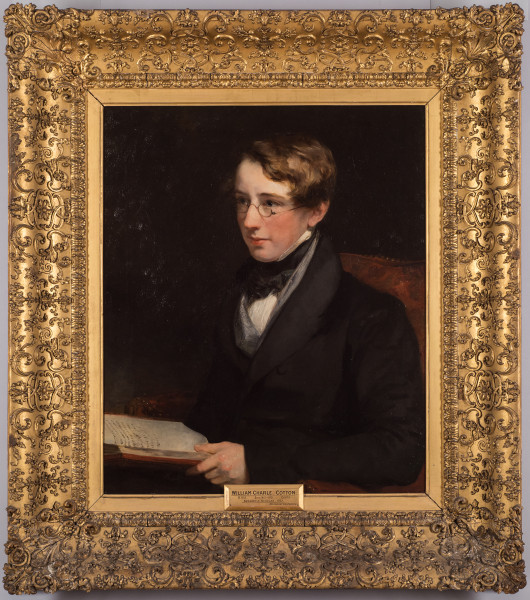
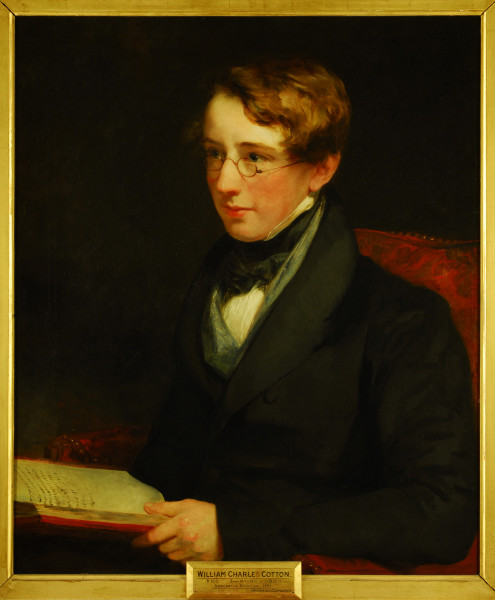
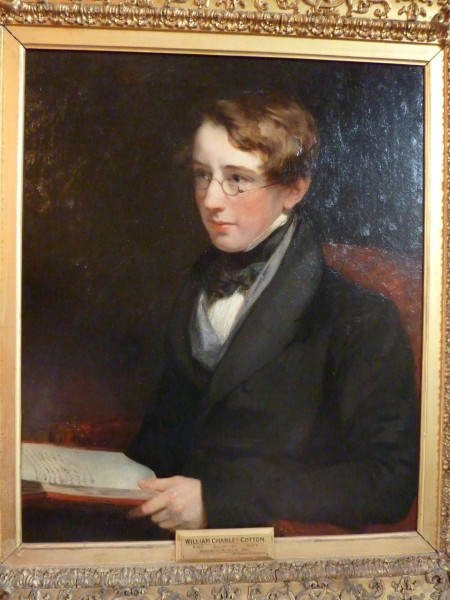
Half-length painted portrait of a young man
Comments
'373 William Charles Cotton
Canvas. 30 1/2 x 25 1/2 in. Signed and dated: 'Mart Carpenter, 1832.'
Coll: Eton leavng portraits presented to the Head Master, Dr. Keate, about 1832. Exh: Tate Gallery, 1951 (28). Lit: L. Cust, 'Eton College Portraits', 1910, No. 135; D. T. Piper, Burl. Mag., XCIII, 1951, p.202, repr. William Charles Cotton (1813-39) entered Eton, 1827. Vicar of Frodsham , Cheshire. Lent by Eton College.
[Source: 'British Portraits: Winter Exhibition, 1956-57', Royal Academy of Arts, p.118]
Information from unpublished Margaret Carpenter catalogue by Richard J Smith, 1995.
Oil on canvas. 30x25". Signed and dated. Cust p.44. Sitters Book: 1832 Mr Cotton £15.15.-. [M32015] 1832 Mr Cotton £15.15.-. [M32023] Picture seen. Photo: Courtauld ref. B73/298
The eldest son of William Cotton, Governor of the Bank of England form 1843 until 1845, who was well known as a church-builder and philanthropist in the East End of London. In 1832 Cotton won the Newcastle Scholarship. One of his Latin verse compositions was printed in Volume II of Musae Etonenses (1869). He was elected Student (i.e. Fellow) of Christ Church, where he remained unitl 1857. After ordination he went to New Zealand with Bishop George Augustus Selwyn, where he worked for a number of years in the mission. After his return to England he became Vicar of Frodsham, near Chester.
Eton Leaving Portraits are portraits of (Old) Etonians, painted to mark their time at the College. There are some 280 in the College Collections. The earliest is attributed to Thomas Hudson (1701-1779) and was painted in 1754. The most recent are by photographic artist Tereza Červeňová and were made in 2024.
The tradition evolved from the earlier custom of boys presenting Leaving Money to the Head Master as they left the College. Edward Barnard was the first Head Master to request a Leaving Portrait in addition to the money. Barnard continued to honour one or two boys with the privilege of presenting their portrait each year. The works were given directly to Head Masters, who later presented their collections to the College. Some Head Masters became Provosts and so displays of portraits moved into the Provost’s Lodge.
This is the collection of portraits of boys requested by Dr Keate (after whom Keate House and Keate’s Lane are named).
The sitter was at Eton from 1827 to 1831 and was a Newcastle Scholar (1832).
Canvas. 30 1/2 x 25 1/2 in. Signed and dated: 'Mart Carpenter, 1832.'
Coll: Eton leavng portraits presented to the Head Master, Dr. Keate, about 1832. Exh: Tate Gallery, 1951 (28). Lit: L. Cust, 'Eton College Portraits', 1910, No. 135; D. T. Piper, Burl. Mag., XCIII, 1951, p.202, repr. William Charles Cotton (1813-39) entered Eton, 1827. Vicar of Frodsham , Cheshire. Lent by Eton College.
[Source: 'British Portraits: Winter Exhibition, 1956-57', Royal Academy of Arts, p.118]
Information from unpublished Margaret Carpenter catalogue by Richard J Smith, 1995.
Oil on canvas. 30x25". Signed and dated. Cust p.44. Sitters Book: 1832 Mr Cotton £15.15.-. [M32015] 1832 Mr Cotton £15.15.-. [M32023] Picture seen. Photo: Courtauld ref. B73/298
The eldest son of William Cotton, Governor of the Bank of England form 1843 until 1845, who was well known as a church-builder and philanthropist in the East End of London. In 1832 Cotton won the Newcastle Scholarship. One of his Latin verse compositions was printed in Volume II of Musae Etonenses (1869). He was elected Student (i.e. Fellow) of Christ Church, where he remained unitl 1857. After ordination he went to New Zealand with Bishop George Augustus Selwyn, where he worked for a number of years in the mission. After his return to England he became Vicar of Frodsham, near Chester.
Eton Leaving Portraits are portraits of (Old) Etonians, painted to mark their time at the College. There are some 280 in the College Collections. The earliest is attributed to Thomas Hudson (1701-1779) and was painted in 1754. The most recent are by photographic artist Tereza Červeňová and were made in 2024.
The tradition evolved from the earlier custom of boys presenting Leaving Money to the Head Master as they left the College. Edward Barnard was the first Head Master to request a Leaving Portrait in addition to the money. Barnard continued to honour one or two boys with the privilege of presenting their portrait each year. The works were given directly to Head Masters, who later presented their collections to the College. Some Head Masters became Provosts and so displays of portraits moved into the Provost’s Lodge.
This is the collection of portraits of boys requested by Dr Keate (after whom Keate House and Keate’s Lane are named).
The sitter was at Eton from 1827 to 1831 and was a Newcastle Scholar (1832).
Description
Content (person)
Cotton, William Charles, 1813 - 1879 (Sitter)
Content (note)
Half-length, in a black coat and a grey waistcoat, holding an open book
Dimensions
height (sight size): 745mm
width (sight size): 617mm
width (sight size): 617mm
Inscription
Inscribed: 'Mart Carpenter 1831'
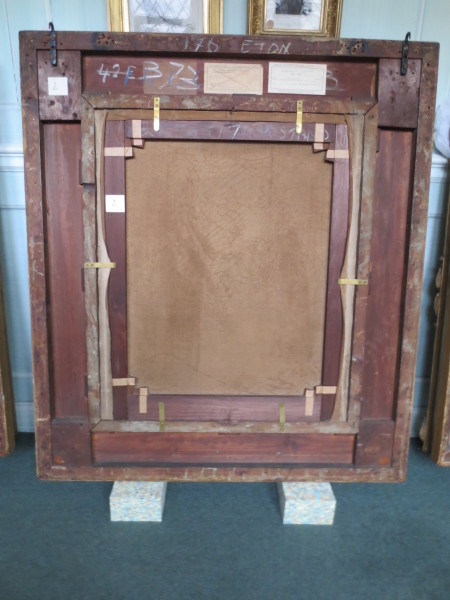
I.D. label on frame
I.D. label on frame
Materials & techniques note
Oil on canvas
Physical description
Elaborate carved gilt Lawrence frame
Production
Person
Date
1831
History and association
Object history note
Provenance: Commissioned by the sitter or his family; by whom presented to the Head Master at Eton College
Exhibited: 'Winter Exhibition', Royal Academy, London, 1956 to 1957, catalogue number 373; Tate, catalogue number 28; Dulwich, catalogue number 36
Exhibited: 'Winter Exhibition', Royal Academy, London, 1956 to 1957, catalogue number 373; Tate, catalogue number 28; Dulwich, catalogue number 36
References
• Cust, L., Eton College Portraits, 1910 (p.44, no.135)
• Dulwich Picture Gallery, Leaving Portraits from Eton College, exhibition catalogue 1991 (p.47)
• McConnell, ed., Treasures of Eton, London, 1976 (p.95)
• Dulwich Picture Gallery, Leaving Portraits from Eton College, exhibition catalogue 1991 (p.47)
• McConnell, ed., Treasures of Eton, London, 1976 (p.95)